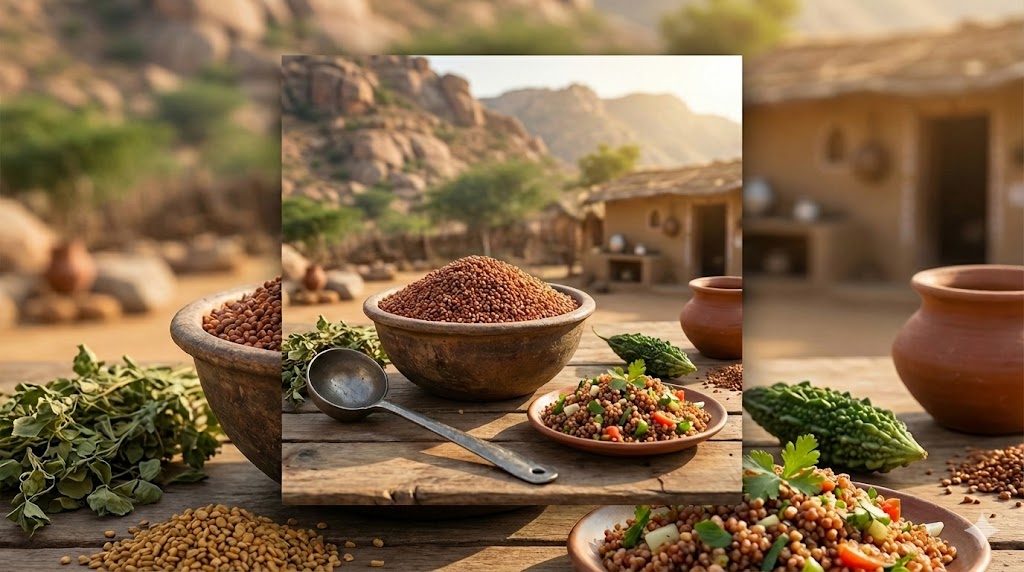
Kodo Millet (Kodra): The Diabetic Defender & Fat Destroyer
I used to see bags of Kodra sitting in the back corners of Udaipur’s grain markets, gathering dust. The traders would shrug. “It’s coarse,” they’d say. “Only the tribals eat it.”
They were right about one thing: it is coarse. But they were wrong about its value.
In our obsession with soft, white, polished rice, we ignored the toughest grain in the Aravallis. Kodo Millet (Kodra) isn’t here to pamper you. It is here to clean you out. It is the broom your metabolism has been waiting for.
If you are fighting stubborn belly fat or watching your blood sugar spike after every meal, stop looking for a miracle pill. The miracle is sitting in a sack in a tribal village in Banswara, waiting for you to notice.
The Ayurvedic Secret: “Lekhana” (The Scraper)
Modern diet culture talks about “burning” fat. Ayurveda talks about “scraping” it.
How Kodo Millet Removes Visceral Fat
In Ayurvedic pharmacology, Kodo Millet is classified as having Lekhana properties. This literally translates to “scraping.”
- The Mechanism: It doesn’t just sit in your stomach. Its dry (Ruksha) nature and high fiber content act like a scrub brush for your digestive tract.
- The Target: It specifically targets Kapha accumulation—what modern science calls visceral fat (the dangerous fat around your liver and organs).
Snippet Bait:Kodo Millet (Kodra) aids weight loss through its Ayurvedic Lekhana (scraping) property, which helps reduce visceral fat and obesity. Its high fiber content and low glycemic index make it the most effective millet for “scraping” excess Kapha and cholesterol from the body.
The HbA1c Crusader: 2025 Science on Diabetes
I have patients who come to me with HbA1c levels hovering above 8.0. They are scared. They should be.
The Polyphenol Shield
While all millets are good, Kodo Millet is the heavyweight champion of antioxidants.
- The Data: Recent 2024 studies confirm that Kodo is exceptionally high in phenolic acids (like ferulic acid) and flavonoids.
- The Effect: These compounds inhibit the enzyme aldose reductase, which is linked to diabetic complications like cataracts and nerve damage. Eating Kodo isn’t just about controlling sugar today; it’s about protecting your nerves for the next twenty years.
The Swap: A study involving diabetic patients showed that swapping white rice for Kodo Millet reduced HbA1c levels significantly over a 3-month period. It’s not magic. It’s chemistry.
Culinary Resilience: The Grain That Doesn’t Turn to Mush
We struggle with millets because we expect them to behave like rice. Most don’t. Barnyard Millet gets mushy. Ragi gets gooey.
Kodo Millet stands its ground.
The Salad Star
At Millets of Mewar, the chefs love Kodo for one reason: Structural Integrity.
- The Texture: You can boil it, drain it, and toss it in a salad. The grains remain separate and firm, offering a chewiness similar to Couscous or Quinoa.
- The Dish: We use it to make a Kodo Upma loaded with seasonal peas and carrots. Unlike semolina (Rava), which can become a sticky lump, Kodo grains stay fluffy and distinct.
The Tribal Food Basket
For the indigenous communities of Southern Rajasthan, Kodo wasn’t a “superfood.” It was the “drought insurance.”
When the monsoons failed and the maize died, the Kodo Millet survived. It grew in rocky, gravelly soil where even grass struggled. By eating it, the tribal farmers absorbed that resilience. Today, we call that “climate-smart agriculture.” They just called it common sense.
Quick Facts: The Kodo Cheatsheet
- Scientific Name:Paspalum scrobiculatum.
- Glycemic Index: Very Low (41-50 range).
- Ayurvedic Property:Lekhana (Scraping/Slimming).
- Shelf Life: The “immortal grain”—can be stored for years without spoiling.
- Key Nutrient: High in Lecithin, excellent for strengthening the nervous system.
- Warning: Must be washed well to remove natural anti-nutrients (saponins).
Conclusion: Stop Eating “Soft”
We have become soft. Our lives are sedentary, and our food is pre-digested.
Your body was designed to work. It was designed to break down tough fibers. When you eat Kodo Millet, you force your metabolism to wake up. You force your gut to do its job.
Don’t buy it because it’s trendy. Buy it because you respect your body enough to give it a challenge. Go to the store, find that “coarse” grain, and make a Kodo Pulao tonight. Your liver will thank you.